Why your Google Ads aren't converting (7 fixes we make in week 1–2)
Traffic without bookings usually isn't a budget problem. Here are the 7 fixes we make in the first two weeks of taking over a Google Ads account.
Why your Google Ads aren't converting (7 fixes we make in week 1–2)
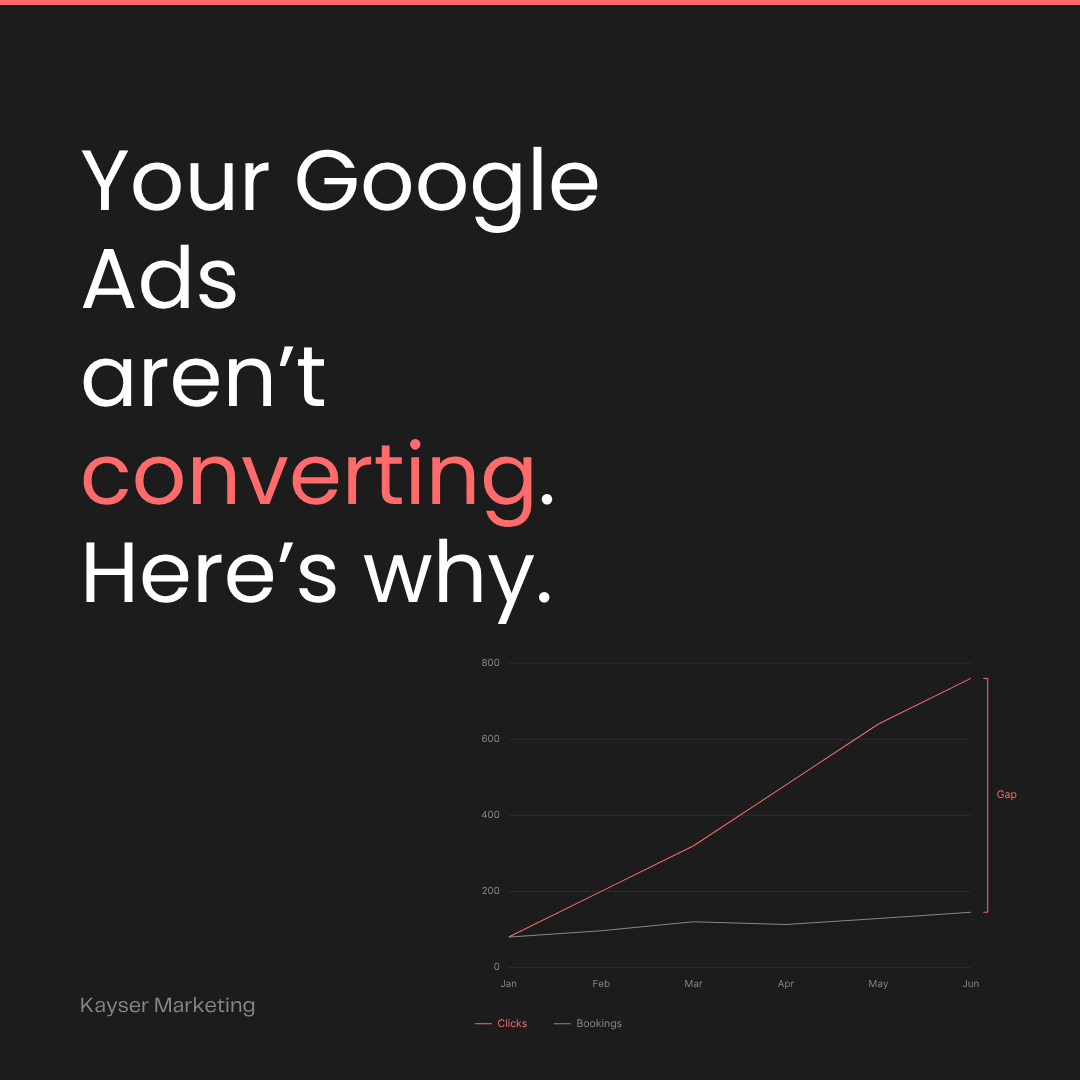
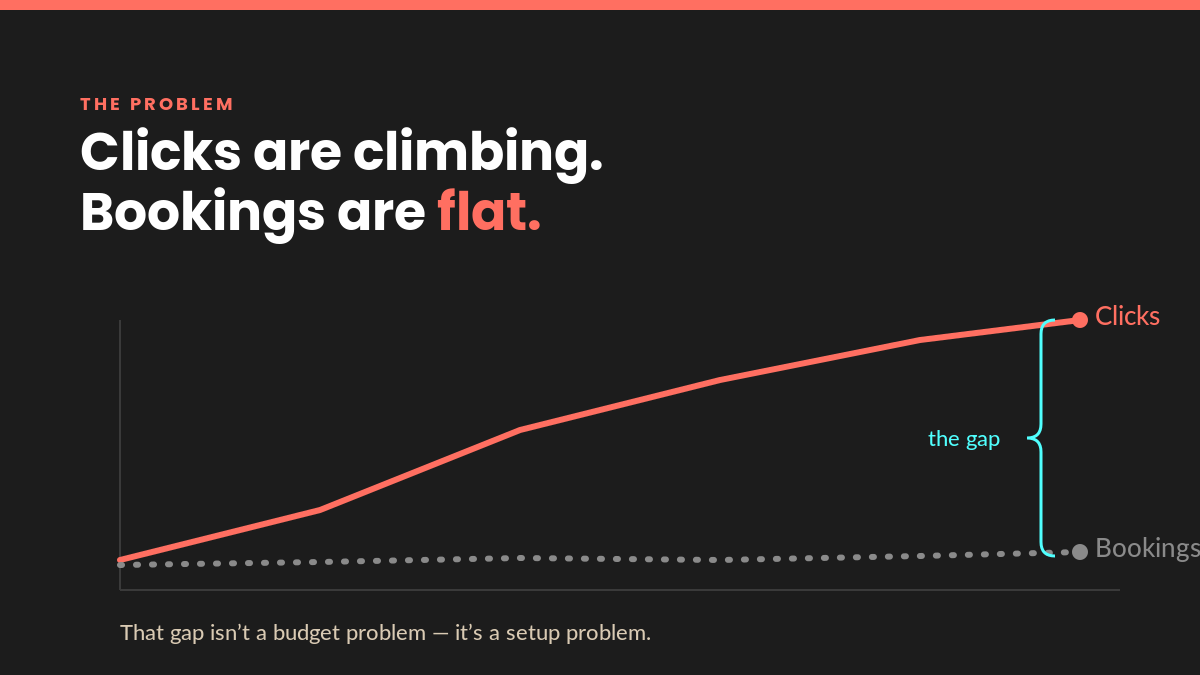
You're spending money. Clicks are coming in. The phone isn't ringing.
That gap between clicks and customers is the most common problem we see when a local business hands me their Google Ads account. And here's the good news: it's almost never a budget problem. It's a settings problem with the campaigns that are running. The traffic is there. The campaign just isn't built to turn it into bookings.
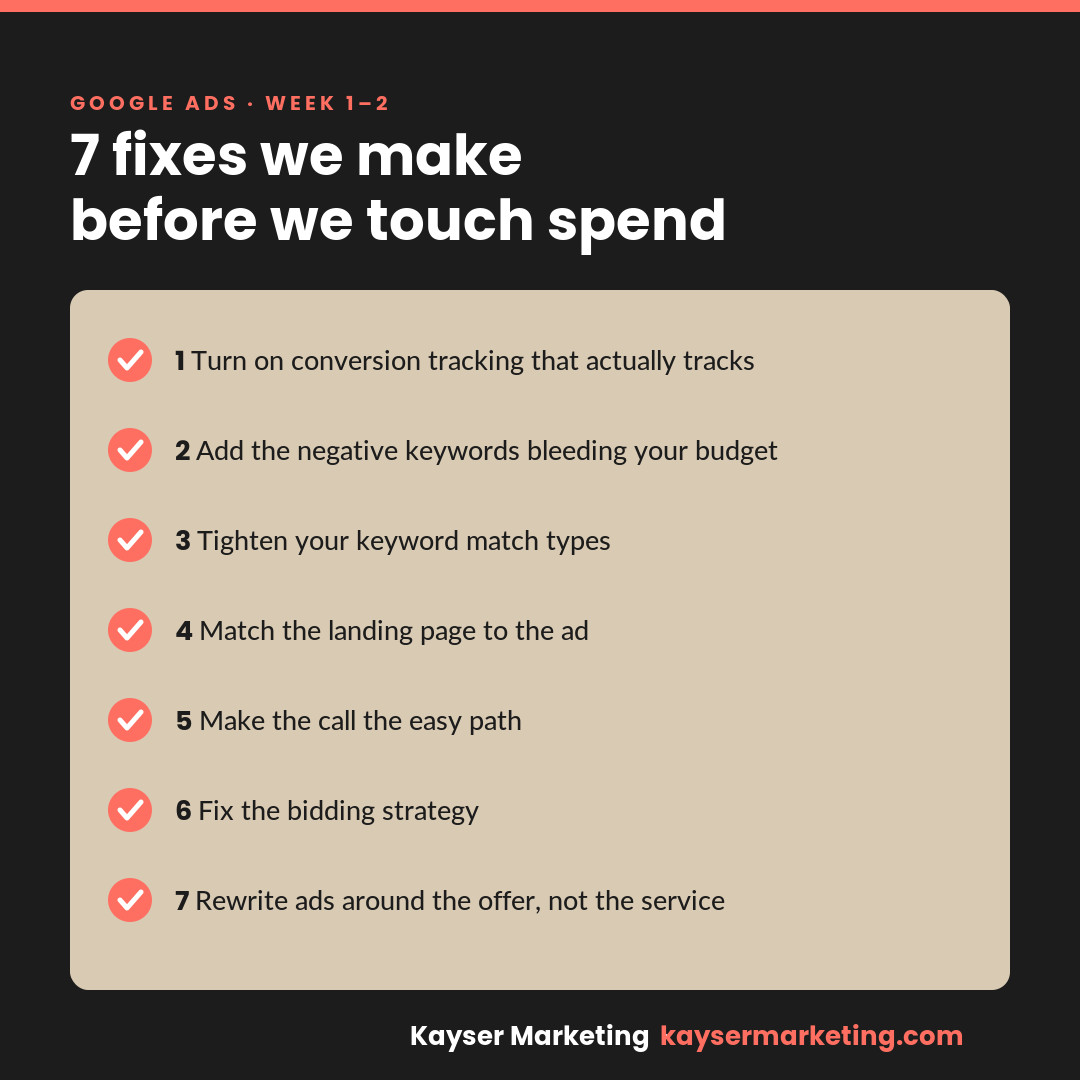
Below are the seven fixes we often make in the first week or two of taking over an account. Most of them are free. All of them compound. Together, they're usually the difference between "ads don't work for us" and "one booking covers three months of spend."
1. We turn on conversion tracking that actually tracks
This is the first thing we check, and it's wrong more often than you'd think. If Google can't see which clicks turn into calls, form fills, or bookings, it's flying blind with your ad spend. You end up optimizing just for clicks instead of customers.
Half the accounts we inherit are either tracking nothing, tracking the wrong thing (like every page view), or double-counting. We fix the tag, define what a real conversion is for your business, and confirm it fires. You can't improve what you can't measure. This one fix changes everything downstream.
2. We add the negative keywords bleeding your budget
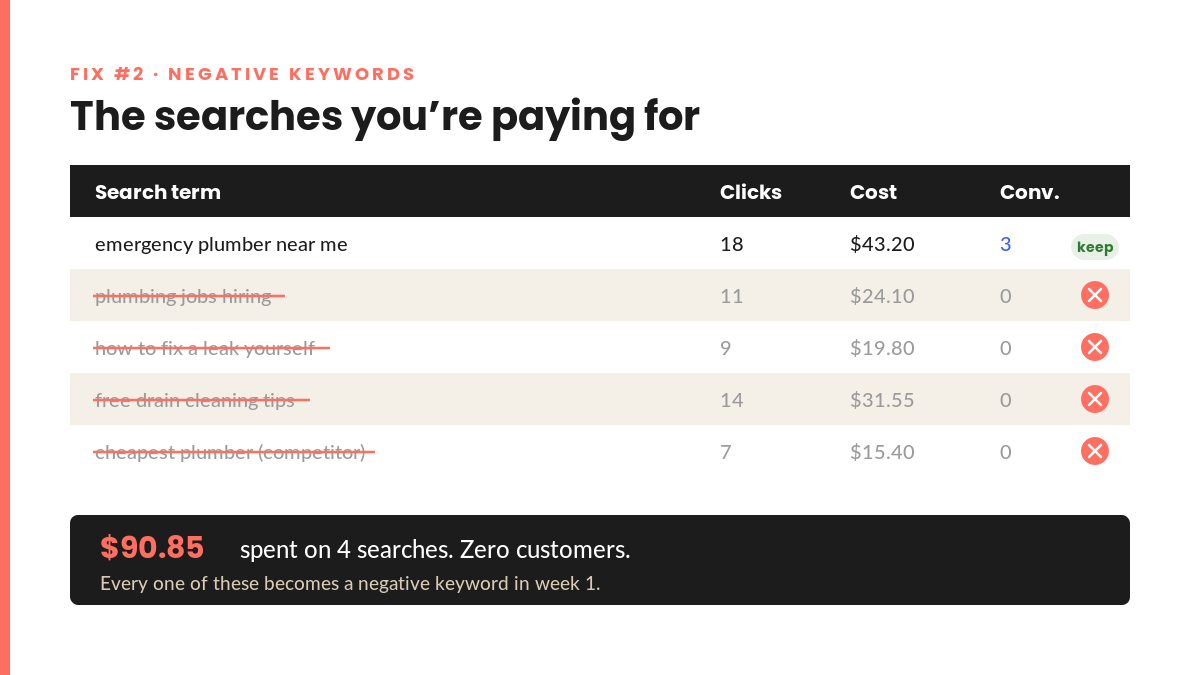
Open the search terms report on almost any local account, and you'll find money going to searches you'd never want to pay for: "free," "jobs," "DIY," "cheapest," competitors' names, or services you don't even offer.
Every one of those clicks costs you and converts nobody. We go through the report line by line and build a negative keyword list, so your budget goes to people actually looking to buy what you sell. It's tedious. It's also one of the fastest ways to lower your cost per lead.
3. We tighten your keyword match types
Broad match is Google's default, and it's the default for a reason: it spends your money the fastest. Left unchecked, it shows your ad to people whose searches are only loosely related to what you do.
As soon as you start getting clicks on the keywords that matter most to you, you want to move your best keywords to phrase and exact match so you're paying to appear in front of intent, not adjacency. Fewer wasted impressions, higher-quality clicks, better cost per booking.
4. We match the landing page to the ad
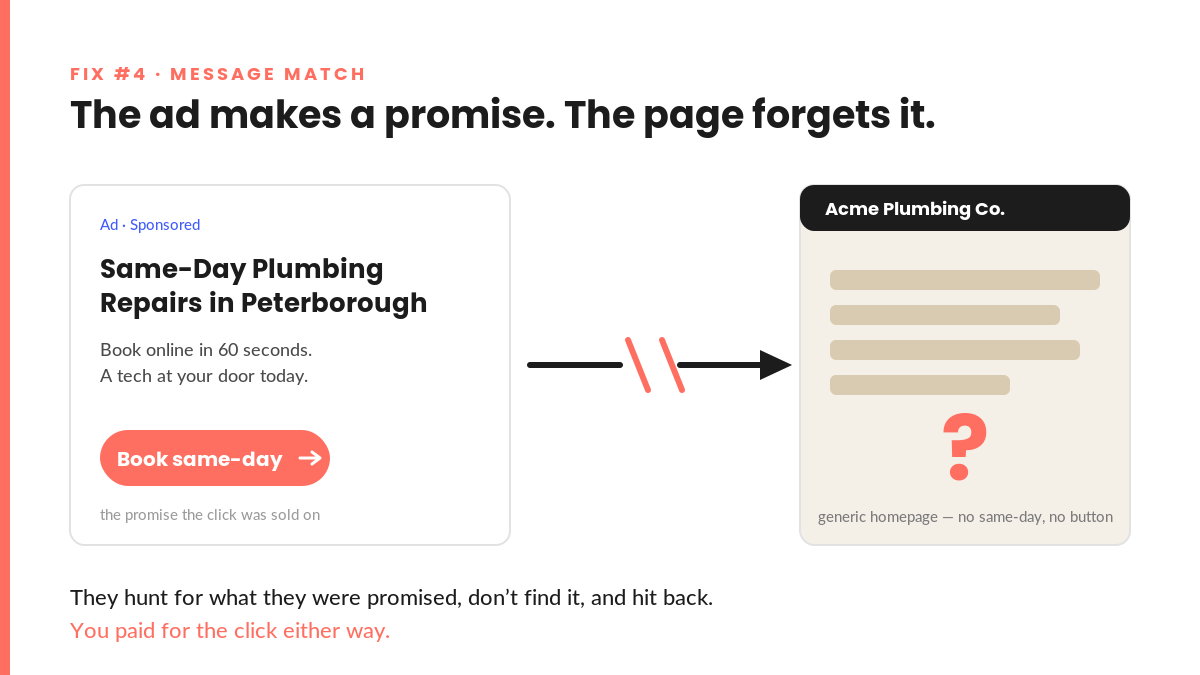
Here's a scenario we see constantly: the ad promises "same-day appointments," someone clicks, and they land on your homepage. Now they have to hunt for what they were promised. Most won't. They'll hit back, and you'll pay for a visit that went nowhere.
The ad and the page have to make the same promise. We point each ad to the page that delivers on it, cut the distractions, and make the next step obvious. Same traffic, more of it converting.
5. We make the call the easy path
For a lot of local businesses, the phone is the sale. But if the ad doesn't have a call button and the number isn't clickable on mobile, you're forcing people to copy, switch apps, and dial. All steps where they will drop off.
We add call extensions, turn on call tracking so those calls show up as conversions, and make phoning you a one-tap action. Then we can finally see which campaigns drive the phone calls, not just the clicks.
6. We fix the bidding strategy
New accounts often default to "Maximize Clicks." That does exactly what it says — buys clicks, whether or not they ever become customers. It's fine as a short-term goal to get the ads going but it’s the wrong goal for turning clicks into paying customers.
Once conversion tracking is solid (fix #1, which is why it comes first), we switch to a strategy that bids for conversions, not traffic. Now Google's algorithm is working toward the thing you actually care about: bookings, calls, and leads.
7. We rewrite ads around the offer, not the service
Most local ads read like a business card: name, service, "call today." That doesn't give anyone a reason to pick you over the four other ads on the page.
We lead with the result or the offer — the appointment availability, the guarantee, the thing that makes you the obvious choice — and give every ad one clear call to action. Better ads earn more clicks at the same budget, and Google rewards them with a lower cost per click on top of it.
What this means for you
None of these are exotic changes. There's no secret tactic and no bigger budget required. It's the stuff that's easy to skip when you're running a business and doing your own ads on the side.
That's the whole point. When Google Ads "doesn't work" for a local business, it's usually because the account was set up once and left alone.
Fix these seven things and the same spend starts producing very different results.
If you'd rather not spend your week in the search terms report, that's what we're here for. We do this setup work in the first two weeks of every account we take on, then we spend the months after making it better.
One more thing worth checking if you're in the trades: you might not need to fix your Search campaign so much as add a second format alongside it. We compare the options in Local Services Ads vs Google Search Ads.
Want us to look at your account? Get in touch and we'll tell you which of these seven are costing you right now.